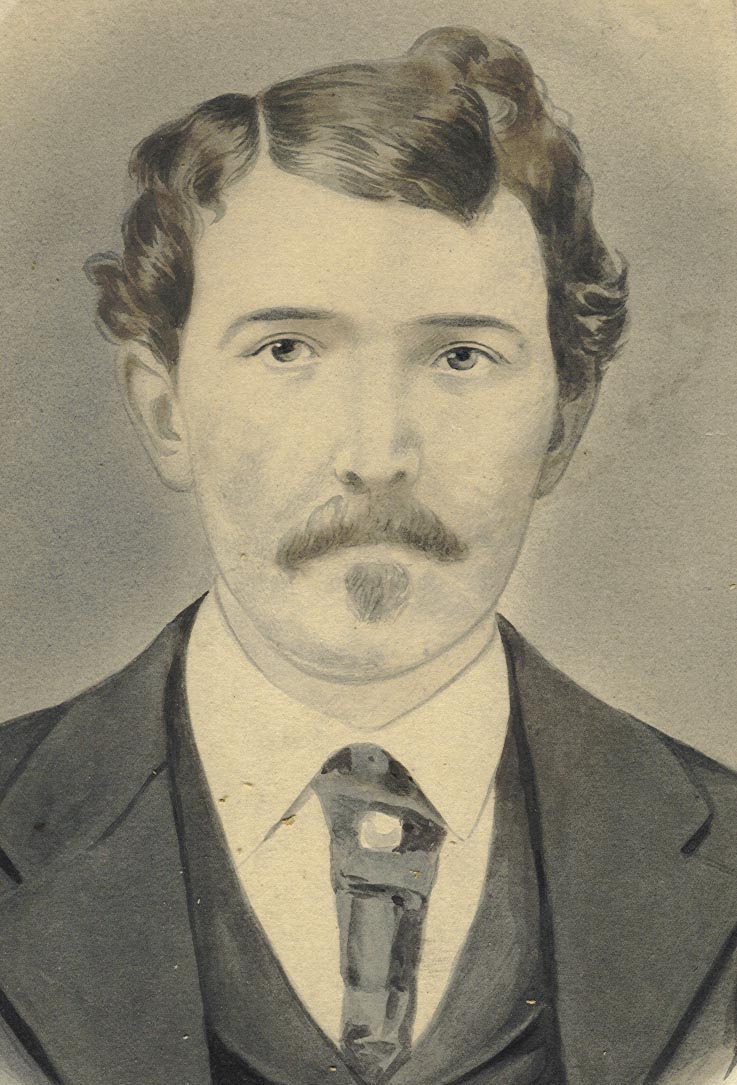
The Mafia Encyclopedia has an entry on the Ragen Colts, the Chicago Irish Gang. In the entry, Harry Madigan is mentioned, albeit, not so kindly.
Source: Carl Sifakis, The Mafia Encyclopedia. Infobase Publishing, 2005. Pages 374-375.
You will find pictures, comments, documents, and stories about Patrick Madigan and Bridget Thompson on this Blog. Additional information about the Madigan/Thompson family is available on my website at http://McIntyreGenealogy.com Please add your comments and stories of the Patrick Madigan/Bridget Thompson Family here too!
About Patrick Madigan and Bridget Thompson
Patrick Madigan and his wife were both born in Ireland. Patrick was born April 1, 1850 in Coonagh, Killeely Civil Parish, County Limerick, Ireland, the son of Patrick Madigan (c1809-1884) and Margaret Fitzgerald (c1806-1886). Bridget, known for most of her life as Bessie, was born October 8, 1852 most likely in or near Limerick City, County Limerick, Ireland, the daughter of John (Thompson) Thomas (1831-1904) and Bridget Reidy (1831-1900). They both immigrated with their families to Chicago, Patrick in 1872 and Bridget in 1866. They married at Old St. John Church in Chicago on February 24, 1878. Together, they had seven children: Mary (Mayme) (1879-1955); Ellen [Sullivan/Madigan Blog] (1880-1966); Nanette (1881-1963); Thomas (1883-1898); Patrick (Harry) (1885-1956), John (1887-1983); and, James (1890-1909). Patrick was a laborer who died January 15, 1890 when he was only 39 and just a few months before the birth of his last child. Bessie ran a grocery store while raising the seven children as a single parent. She managed to own her own home on the west side of Chicago. She died from myocarditis on December 31, 1935.
Showing posts with label Ragen's Colts. Show all posts
Friday, November 13, 2015
Thursday, November 10, 2011
Ragen's Colts and Harry Madigan
Ragen's Colts was a chiefly Irish street gang which dominated the Chicago underworld during the early twentieth century. By the late 1920s and early '30s, the gang became part of the Chicago Outfit under Al Capone.
Originally established as an athletic club, the Ragen's Athletic and Benevolent Association was soon led by team pitcher Frank Ragen. He hired out members of the club to Chicago Democrat politicians to do various forms of election fraud. Due to the gang's activities and increased votes by recent immigrants, the Democratic Party soon gained control over the Chicago City Council and Illinois legislature.
The gang quickly expanded, numbering 160 members by 1902 and 2,000 by 1908. It earned the motto "Hit Me and You Hit 2,000". By the end of the decade, the gang had financed careers of hundreds of Chicago city officials, including prominent aldermen, police chiefs, and city treasurers, as well as Ragen himself. Ragen became Chicago police commissioner. By 1920, many members of the gang had become notorious criminals and gunmen, such as William "Gunner" McPadden, Harry Madigan, Joseph "Dynamite" Brooks, Danny McFall, Hughey "Stubby" McGovern, Davy "Yiddles" Miller, and Ralph Sheldon.
The years after World War I were a time of increased social tension, as returning veterans competed with more recent immigrants and newer African American migrants from the South for jobs and housing. In several cities, such tensions erupted in rioting, often instigated by one of slightly older, more established groups to restore dominance over a newer group, often a minority. The Irish and African Americans were both concentrated in housing on the South Side and in jobs at the stockyards located on that side of the city.
The Ragen gang were believed to instigate fights between black and other South Side neighborhoods that contributed to the Chicago Race Riot of 1919. The gang led raids from Irish neighborhoods into the Black Belt, where they looted homes and killed several people. Blacks retaliated by attacking other South Side neighborhoods. As news of the attacks spread, other neighborhoods around the city began rioting. Violence lasted four days and resulted in 38 deaths: 23 black and 15 white, and more than 1,000 injured.
The Ragen Colts also directed their anger at the Ku Klux Klan for its anti-Catholicism. In 1921, "In September, 3,000 people from the stockyards district (of Chicago) watched as the Colts hanged in effigy "a white-sheeted Klansman."" (Tuttle)
During Prohibition, the gang soon began bootlegging. Member Ralph Sheldon formed his own group and began hijacking rival liquor shipments. While the gang came into conflict with the Chicago Outfit during the bootleg wars, Capone, impressed with the gang, hired them as enforcers for the organization. The Irish Ragen gang were eventually absorbed into the organization following the establishment of the National Crime Syndicate in 1932. Many members would later become top leaders of the Chicago crime syndicate.
In 1920 several members of Ragen's Colts split off to form the NFL football team, the Chicago Maroons, later known as the Chicago Cardinals.
Originally established as an athletic club, the Ragen's Athletic and Benevolent Association was soon led by team pitcher Frank Ragen. He hired out members of the club to Chicago Democrat politicians to do various forms of election fraud. Due to the gang's activities and increased votes by recent immigrants, the Democratic Party soon gained control over the Chicago City Council and Illinois legislature.
The gang quickly expanded, numbering 160 members by 1902 and 2,000 by 1908. It earned the motto "Hit Me and You Hit 2,000". By the end of the decade, the gang had financed careers of hundreds of Chicago city officials, including prominent aldermen, police chiefs, and city treasurers, as well as Ragen himself. Ragen became Chicago police commissioner. By 1920, many members of the gang had become notorious criminals and gunmen, such as William "Gunner" McPadden, Harry Madigan, Joseph "Dynamite" Brooks, Danny McFall, Hughey "Stubby" McGovern, Davy "Yiddles" Miller, and Ralph Sheldon.
The years after World War I were a time of increased social tension, as returning veterans competed with more recent immigrants and newer African American migrants from the South for jobs and housing. In several cities, such tensions erupted in rioting, often instigated by one of slightly older, more established groups to restore dominance over a newer group, often a minority. The Irish and African Americans were both concentrated in housing on the South Side and in jobs at the stockyards located on that side of the city.
The Ragen gang were believed to instigate fights between black and other South Side neighborhoods that contributed to the Chicago Race Riot of 1919. The gang led raids from Irish neighborhoods into the Black Belt, where they looted homes and killed several people. Blacks retaliated by attacking other South Side neighborhoods. As news of the attacks spread, other neighborhoods around the city began rioting. Violence lasted four days and resulted in 38 deaths: 23 black and 15 white, and more than 1,000 injured.
The Ragen Colts also directed their anger at the Ku Klux Klan for its anti-Catholicism. In 1921, "In September, 3,000 people from the stockyards district (of Chicago) watched as the Colts hanged in effigy "a white-sheeted Klansman."" (Tuttle)
During Prohibition, the gang soon began bootlegging. Member Ralph Sheldon formed his own group and began hijacking rival liquor shipments. While the gang came into conflict with the Chicago Outfit during the bootleg wars, Capone, impressed with the gang, hired them as enforcers for the organization. The Irish Ragen gang were eventually absorbed into the organization following the establishment of the National Crime Syndicate in 1932. Many members would later become top leaders of the Chicago crime syndicate.
In 1920 several members of Ragen's Colts split off to form the NFL football team, the Chicago Maroons, later known as the Chicago Cardinals.
- Kelly, Robert J. Encyclopedia of Organized Crime in the United States. Westport, Connecticut: Greenwood Press, 2000. ISBN 0-313-30653-2
- Sifakis, Carl. The Mafia Encyclopedia. New York: Da Capo Press, 2005. ISBN 0-8160-5694-3
- Sifakis, Carl. The Encyclopedia of American Crime. New York: Facts on File Inc., 2005. ISBN 0-8160-4040-0
- Tuttle, William, M. Jr. Race Riot: Chicago in the Red Summer of 1919 University of Illinois Prses, 1996.
Wednesday, November 9, 2011
Harry Madigan, the Mobster?
Bill Sullivan found a contemporary video of 5615 W. Roosevelt Road, Cicero, the building where Harry Madigan ran his saloon in 1926 and the site where Assistant States Attorney William McSwiggin was assassinated. Although the building looks a little different from the newspaper photo of it in 1926, the Cook County Assessor's website notes the building at 5615 W. Roosevelt Road is 96 years old. So, it must be the same. Thanks Bill for finding this.
Included on the You Tube webpage below the above video, the following comment was included:
"Assistant States Attorney William McSwiggin had two sides to him and it ended up costing him his life. By day he was known as a hanging prosecutor who tried to bring Al Capone to justice. By night he was a card player, drinker and all around bon vivant who traveled in the same social settings as the men he prosecuted. It was late spring in 1926 when he was out for a night of carousing in Cicero with some friends. Along the way the hooked up with the O'Donnell brothers who were well known north side gangsters who were at odds with Al Capone. Al Capone got word that his enemies were out and about in his town he dispatched gunmen to take them out. They caught up with the group at the Pony Inn on Roosevelt Rd. just west of Central. The Pony was a Capone controlled speakeasy that was run by an Irish mobster named Harry Madigan. Madigan was a member of the renowned Irish gang Reagan's Colt's. He would later go to jail for kidnapping and extortion. Anyway the gunmen raked the group with machine gun fire as they left the club. Three were killed including McSwiggin the O'Donnell brothers escaped unscathed. Here we present the Pony as it looks today a nondescript place called Sarno's. Maybe it's just a coincidence or perhaps things haven't changed much. Last year Cicero crime boss Michael Sarno was sentenced to prison in a case that involved extortion, illegal gambling, police corruption and a bombing. The more things change?"
Source: ChiTownView's Channel, YouTube
*******************************************************************************
However, in The Illinois Crime Survey published by the Illinois Association for Criminal Justice in cooperation with The Chicago Crime Commission, 1929 (Blakely Printing Company, Chicago) Chapter XXIV, "The Gangster and the Politician," Section 9, "Same: Election Violence," page 1005 it reads:
"Ragen members could be secured to do "stong arm" work in the elections in other districts as well as the stockyards area. Hugh McGovern with John and Harry Madigan and John O'Brien kidnapped a Cicero clerk of election by the name of Joseph Rice and held him prisoner in a West Harrison Street saloon. The plaintiff charged kidnapping and assault to kill. The history of the trial of these four men is an interesting sidelight on the administration of the law. True bills were voted by the April grand jury in 1924. The case did not come up for trial until June, 1926. Critics of State's Attorney Crowe, who was elected in the primaries of 1924 when so much violence was used in the elections, accused him of purposely shelving this case along with others that grew out of the 1924 elections. Just before the case was due to come to trial a new assistant prosecutor was assigned to it, in place of the one who had been familiar with the case from its inception. The men were acquitted of the charge although the defense had offered no closing argument and the assistant prosecuting attorney in charge had made only a brief summary of the case for the state. The prosecuting witness, who had positively identified his assailants as McGovern, the Madigan Brothers, and O'Brien two years before, refused in 1926 to say that these four were the kidnappers, and it was generally understood that it was for fear of his life."
So, although there seems pretty good evidence the Madigan brothers might have been guilty of kidnapping and extortion, the record of The Illinois Crime Survey indicates the men were acquitted. Also, to my knowledge, Harry Madigan was never "convicted" and sentenced to jail.
A little earlier in The Illinois Crime Survey, Chapter XVII, "The McSwiggin Assasination as a Typical Incident," Section 6, "The Federal Grand Jury Indicts Capone and the O'Donnells," page 836-837, it reads:
"While State's Attorney Crowe's grand jury was in session, primarily to consider the solution of the McSwiggin mystery, a Federal Grand Jury was busy investigating prohibition violations, with possible bearing on the murders of Duffy, Doherty and McSwiggin. United States District Attorney Edwin A. Olson, in charge of this Federal Grand Jury, was of the Deneen faction. Chief Svoboda, of the Cicero police, and Joseph Klenha, president of the village board, were summoned to appear.
"Federal agents had seized a stock of beer samples stored in the basement of the Cicero City Hall. It had been reported that immediately after the triple slaying, Cicero policemen had visited every saloon in the village and collected beer samples. According to the information given the Government on May 22, the police had told the saloon owners:
" 'There is going to be a big investigation. Don't tell anybody anything. If you open your faces these samples go to the prohibition office and your prosecution under federal statues is certain.'
"The Federal Grand Jury, on May 27, returned two indictments, naming the leaders of the two rival beer gangs, the Capone gang and the O'Donnells, charging conspiracy to violate the prohibition law. Those in the Capone gang who were indicted were Al Capone, Ralph, his brother, Frank Smith, Charles Fischetti and Peter Payette. The O'Donnell gangsters named were: William (Klondike), Myles, and Barnard O'Donnell, and Harry Madigan, the owner of the saloon where McSwiggin and his companions were killed."
Harry Madigan was indeed indicted due to violation of the prohibition law, However, in searching other documents, I have yet to find that Harry Madigan was convicted of any federal charges associated with these prohibition violations. But I'm still looking.
Included on the You Tube webpage below the above video, the following comment was included:
"Assistant States Attorney William McSwiggin had two sides to him and it ended up costing him his life. By day he was known as a hanging prosecutor who tried to bring Al Capone to justice. By night he was a card player, drinker and all around bon vivant who traveled in the same social settings as the men he prosecuted. It was late spring in 1926 when he was out for a night of carousing in Cicero with some friends. Along the way the hooked up with the O'Donnell brothers who were well known north side gangsters who were at odds with Al Capone. Al Capone got word that his enemies were out and about in his town he dispatched gunmen to take them out. They caught up with the group at the Pony Inn on Roosevelt Rd. just west of Central. The Pony was a Capone controlled speakeasy that was run by an Irish mobster named Harry Madigan. Madigan was a member of the renowned Irish gang Reagan's Colt's. He would later go to jail for kidnapping and extortion. Anyway the gunmen raked the group with machine gun fire as they left the club. Three were killed including McSwiggin the O'Donnell brothers escaped unscathed. Here we present the Pony as it looks today a nondescript place called Sarno's. Maybe it's just a coincidence or perhaps things haven't changed much. Last year Cicero crime boss Michael Sarno was sentenced to prison in a case that involved extortion, illegal gambling, police corruption and a bombing. The more things change?"
Source: ChiTownView's Channel, YouTube
*******************************************************************************
However, in The Illinois Crime Survey published by the Illinois Association for Criminal Justice in cooperation with The Chicago Crime Commission, 1929 (Blakely Printing Company, Chicago) Chapter XXIV, "The Gangster and the Politician," Section 9, "Same: Election Violence," page 1005 it reads:
"Ragen members could be secured to do "stong arm" work in the elections in other districts as well as the stockyards area. Hugh McGovern with John and Harry Madigan and John O'Brien kidnapped a Cicero clerk of election by the name of Joseph Rice and held him prisoner in a West Harrison Street saloon. The plaintiff charged kidnapping and assault to kill. The history of the trial of these four men is an interesting sidelight on the administration of the law. True bills were voted by the April grand jury in 1924. The case did not come up for trial until June, 1926. Critics of State's Attorney Crowe, who was elected in the primaries of 1924 when so much violence was used in the elections, accused him of purposely shelving this case along with others that grew out of the 1924 elections. Just before the case was due to come to trial a new assistant prosecutor was assigned to it, in place of the one who had been familiar with the case from its inception. The men were acquitted of the charge although the defense had offered no closing argument and the assistant prosecuting attorney in charge had made only a brief summary of the case for the state. The prosecuting witness, who had positively identified his assailants as McGovern, the Madigan Brothers, and O'Brien two years before, refused in 1926 to say that these four were the kidnappers, and it was generally understood that it was for fear of his life."
So, although there seems pretty good evidence the Madigan brothers might have been guilty of kidnapping and extortion, the record of The Illinois Crime Survey indicates the men were acquitted. Also, to my knowledge, Harry Madigan was never "convicted" and sentenced to jail.
A little earlier in The Illinois Crime Survey, Chapter XVII, "The McSwiggin Assasination as a Typical Incident," Section 6, "The Federal Grand Jury Indicts Capone and the O'Donnells," page 836-837, it reads:
"While State's Attorney Crowe's grand jury was in session, primarily to consider the solution of the McSwiggin mystery, a Federal Grand Jury was busy investigating prohibition violations, with possible bearing on the murders of Duffy, Doherty and McSwiggin. United States District Attorney Edwin A. Olson, in charge of this Federal Grand Jury, was of the Deneen faction. Chief Svoboda, of the Cicero police, and Joseph Klenha, president of the village board, were summoned to appear.
"Federal agents had seized a stock of beer samples stored in the basement of the Cicero City Hall. It had been reported that immediately after the triple slaying, Cicero policemen had visited every saloon in the village and collected beer samples. According to the information given the Government on May 22, the police had told the saloon owners:
" 'There is going to be a big investigation. Don't tell anybody anything. If you open your faces these samples go to the prohibition office and your prosecution under federal statues is certain.'
"The Federal Grand Jury, on May 27, returned two indictments, naming the leaders of the two rival beer gangs, the Capone gang and the O'Donnells, charging conspiracy to violate the prohibition law. Those in the Capone gang who were indicted were Al Capone, Ralph, his brother, Frank Smith, Charles Fischetti and Peter Payette. The O'Donnell gangsters named were: William (Klondike), Myles, and Barnard O'Donnell, and Harry Madigan, the owner of the saloon where McSwiggin and his companions were killed."
Harry Madigan was indeed indicted due to violation of the prohibition law, However, in searching other documents, I have yet to find that Harry Madigan was convicted of any federal charges associated with these prohibition violations. But I'm still looking.
Subscribe to:
Posts (Atom)